Certification Overview
About this Certification
The Professional Certification in Cyber Security is designed to provide learners with a practical understanding of modern cyber threats and the methods used to protect digital systems, networks, applications, and sensitive information.
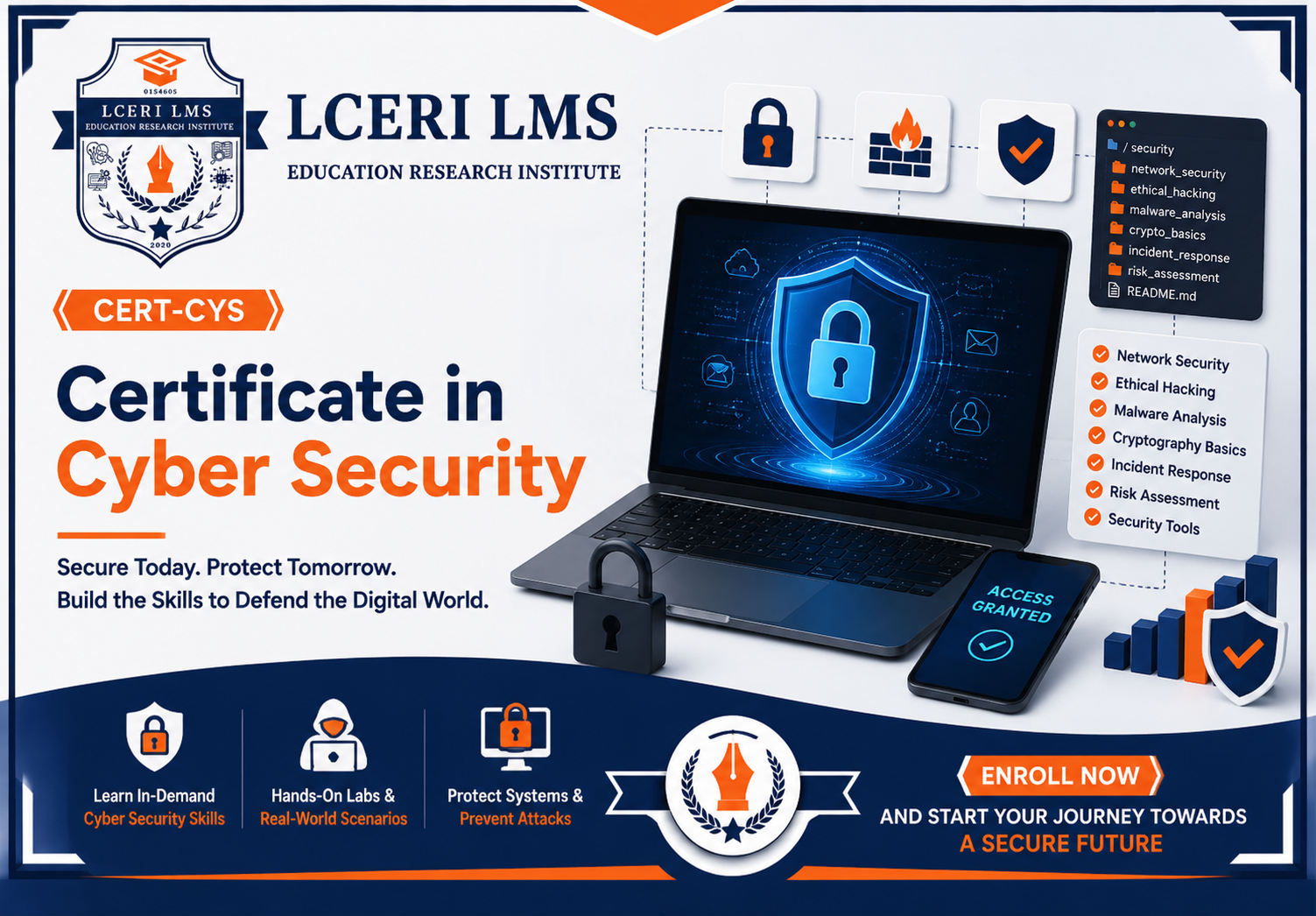
The certification introduces core areas of cyber security, including information security principles, network security, malware, phishing, social engineering, access control, password security, data protection, vulnerability management, cloud security, ethical hacking concepts, digital forensics, and incident response.
Learners will examine how cyberattacks occur, how security weaknesses are identified, and how organisations can reduce operational, financial, legal, and reputational risks. The programme also covers security policies, employee awareness, privacy, risk assessment, and responsible use of cyber security tools.
Through guided lessons, practical exercises, case studies, quizzes, and a final project, participants will develop the skills required to identify common threats, apply basic protective controls, and support cyber security practices within professional environments.
Upon successful completion, participants should be able to:
Explain the fundamental principles of cyber security and information protection.
Identify common cyber threats, vulnerabilities, and attack methods.
Understand malware, phishing, ransomware, social engineering, and password attacks.
Apply basic network, device, account, and data security measures.
Understand access control, authentication, encryption, and secure communication.
Conduct basic cyber risk and vulnerability assessments.
Recognise signs of a security incident and follow appropriate response procedures.
Understand the fundamentals of ethical hacking, digital forensics, and penetration testing.
Develop a basic cyber security plan for an organisation or digital system.
Promote safe and responsible digital practices in the workplace.
The certification introduces core areas of cyber security, including information security principles, network security, malware, phishing, social engineering, access control, password security, data protection, vulnerability management, cloud security, ethical hacking concepts, digital forensics, and incident response.
Learners will examine how cyberattacks occur, how security weaknesses are identified, and how organisations can reduce operational, financial, legal, and reputational risks. The programme also covers security policies, employee awareness, privacy, risk assessment, and responsible use of cyber security tools.
Through guided lessons, practical exercises, case studies, quizzes, and a final project, participants will develop the skills required to identify common threats, apply basic protective controls, and support cyber security practices within professional environments.
Upon successful completion, participants should be able to:
Explain the fundamental principles of cyber security and information protection.
Identify common cyber threats, vulnerabilities, and attack methods.
Understand malware, phishing, ransomware, social engineering, and password attacks.
Apply basic network, device, account, and data security measures.
Understand access control, authentication, encryption, and secure communication.
Conduct basic cyber risk and vulnerability assessments.
Recognise signs of a security incident and follow appropriate response procedures.
Understand the fundamentals of ethical hacking, digital forensics, and penetration testing.
Develop a basic cyber security plan for an organisation or digital system.
Promote safe and responsible digital practices in the workplace.