Certification Overview
About this Certification
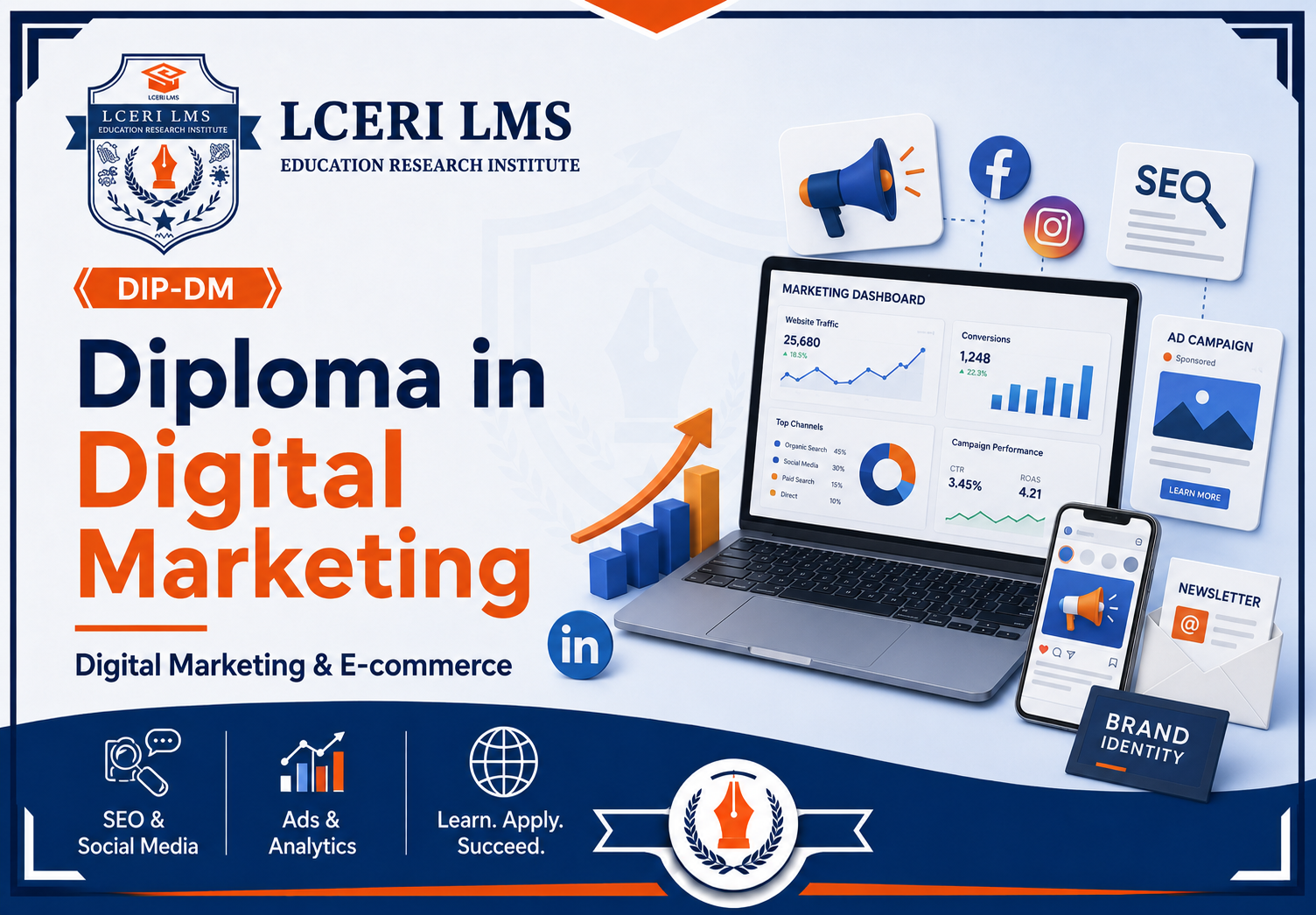
The Professional Certification in Digital Marketing is designed to provide learners with the practical knowledge and strategic skills required to plan, execute, manage, and evaluate effective digital marketing campaigns.
The certification covers the major areas of digital marketing, including social media marketing, search engine optimisation, content marketing, paid advertising, email marketing, influencer marketing, online branding, lead generation, conversion optimisation, and marketing analytics.
Learners will explore how businesses use platforms such as Facebook, Instagram, TikTok, YouTube, LinkedIn, Google, and email to reach target audiences, generate leads, increase sales, and build long-term customer relationships.
Participants will learn how to identify customer segments, develop buyer personas, create content calendars, write engaging marketing copy, manage social media pages, optimise websites for search engines, and run paid advertising campaigns. The programme also covers campaign budgeting, audience targeting, keyword research, performance tracking, remarketing, and return on advertising spend.
The certification introduces commonly used digital marketing tools, including Meta Business Suite, Google Ads, Google Analytics, Google Search Console, Canva, email marketing platforms, keyword research tools, and social media management applications.
Through guided lessons, practical assignments, campaign exercises, case studies, and a final project, learners will develop the ability to create and implement a complete digital marketing strategy for a business, organisation, product, or personal brand.
Upon successful completion, participants should be able to:
Explain the principles, channels, and customer journey of digital marketing.
Identify target audiences and develop detailed buyer personas.
Create digital marketing strategies aligned with business objectives.
Plan and manage social media content across major platforms.
Apply search engine optimisation techniques to websites and online content.
Conduct keyword, audience, market, and competitor research.
Create effective written, visual, and video content for digital campaigns.
Set up and manage basic paid advertising campaigns.
Develop email marketing campaigns and customer communication sequences.
Generate leads through landing pages, forms, offers, and calls to action.
Track traffic, engagement, conversions, customer acquisition cost, and campaign returns.
Use analytics data to improve marketing performance and business decisions.
Apply ethical advertising, data privacy, copyright, and platform compliance standards.
Prepare and present a complete digital marketing campaign plan.
The certification covers the major areas of digital marketing, including social media marketing, search engine optimisation, content marketing, paid advertising, email marketing, influencer marketing, online branding, lead generation, conversion optimisation, and marketing analytics.
Learners will explore how businesses use platforms such as Facebook, Instagram, TikTok, YouTube, LinkedIn, Google, and email to reach target audiences, generate leads, increase sales, and build long-term customer relationships.
Participants will learn how to identify customer segments, develop buyer personas, create content calendars, write engaging marketing copy, manage social media pages, optimise websites for search engines, and run paid advertising campaigns. The programme also covers campaign budgeting, audience targeting, keyword research, performance tracking, remarketing, and return on advertising spend.
The certification introduces commonly used digital marketing tools, including Meta Business Suite, Google Ads, Google Analytics, Google Search Console, Canva, email marketing platforms, keyword research tools, and social media management applications.
Through guided lessons, practical assignments, campaign exercises, case studies, and a final project, learners will develop the ability to create and implement a complete digital marketing strategy for a business, organisation, product, or personal brand.
Upon successful completion, participants should be able to:
Explain the principles, channels, and customer journey of digital marketing.
Identify target audiences and develop detailed buyer personas.
Create digital marketing strategies aligned with business objectives.
Plan and manage social media content across major platforms.
Apply search engine optimisation techniques to websites and online content.
Conduct keyword, audience, market, and competitor research.
Create effective written, visual, and video content for digital campaigns.
Set up and manage basic paid advertising campaigns.
Develop email marketing campaigns and customer communication sequences.
Generate leads through landing pages, forms, offers, and calls to action.
Track traffic, engagement, conversions, customer acquisition cost, and campaign returns.
Use analytics data to improve marketing performance and business decisions.
Apply ethical advertising, data privacy, copyright, and platform compliance standards.
Prepare and present a complete digital marketing campaign plan.